

We are living in the age of digital where we research, socialize, get the news, work, and purchase online.
With so much happening online, direct mail may seem like a relic of the past.
However, while the origins can be traced back thousands of years, direct mail today is a vibrant marketing channel.
So how did direct mail get its start?
Believe it or not, direct mail has roots dating back thousands of years. The earliest known example of direct mail dates back to ancient Egypt. At that time, scribes would send papyrus messages to citizens announcing various governmental decrees and public events.
The Rise of Postal Services
In the 17th and 18th centuries, formal postal services in countries like England and the United States transformed communication. The USPS traces back to colonial times, when mail delivery was decentralized and managed by individual colonies.
In 1775, Benjamin Franklin became the first Postmaster General, appointed by the Continental Congress, marking the birth of the U.S. postal system.
Throughout the 19th century, advances in transportation and communication technology drove major expansion and innovation. Steam-powered trains and the telegraph enabled faster, more reliable mail delivery nationwide. The Pony Express (1860–1861) exemplified this push for speed, covering over 1,800 miles in just ten days.
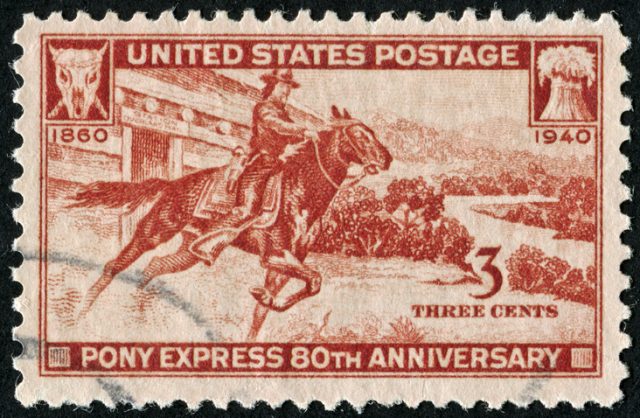
The introduction of postage stamps and standardized rates made sending letters and packages more accessible to the public, paving the way for direct mail to become a widely used marketing tool.
The First Junk Mail
While direct mail is often associated with marketing and promotions, its history also includes a dark side: junk mail.
The term “junk mail” was coined in the early 20th century to describe unsolicited and often unwanted promotional materials sent via mail.
Interestingly, the first recorded instance of junk mail dates back to 1864 when an enterprising salesman sent unsolicited circulars to potential customers offering dental services.
Technological Advancements
The 20th century brought about significant advancements in printing technology and data processing. These changes further fueled the growth of direct mail as a marketing medium.
The introduction of offset printing, personal computers, and data analytics tools enabled marketers to produce targeted, personalized mailings on a mass scale. As a result, this increased the effectiveness and efficiency of direct mail campaigns.
Direct Mail in the Digital Age
With the advent of the internet and digital marketing channels, some predicted the demise of direct mail as a marketing tactic. However, direct mail has proven to be remarkably resilient. It has adapted to the changing landscape by integrating digital technologies and data-driven strategies.
Today, direct mail campaigns often complement online marketing efforts. In addition, they provide a tangible and memorable touchpoint in an increasingly virtual world.
In fact, the United States Postal Service (USPS) delivers billions of pieces of mail each year. This makes it one of the largest mail carriers in the world.
High Engagement Rates
Contrary to popular belief, direct mail boasts impressive engagement rates that rival or even surpass those of digital channels. Direct mail has a higher open rate of 80-90%, whereas email has 20-30%. This high level of engagement can be attributed to the tactile nature of direct mail. This quality creates a physical connection with recipients and makes them more likely to respond.
Personalization Pays Off
In today’s era of data-driven marketing, personalization is key to success, and direct mail is no exception. Some 71% of consumers feel that direct mail is more personal than online digital communication.
By leveraging customer data and segmentation techniques, marketers can tailor their direct mail campaigns to specific demographics, interests, and purchasing behaviors. This practice increases the likelihood of conversion and drives higher ROI.
A Green Choice
Contrary to popular belief, direct mail can be an environmentally friendly marketing option. Many direct mail materials are produced using recycled paper and environmentally sustainable printing practices.
Additionally, advances in digital printing technology have made it possible to produce direct mail materials on demand. This reduces waste and minimizes environmental impact. When done responsibly, direct mail can be a green choice for businesses looking to connect with customers in a meaningful way.
Direct mail may have a long and storied history, but its relevance in today’s marketing landscape cannot be overlooked.
From its ancient origins to its modern-day applications, direct mail continues to evolve and adapt.
So, the next time you receive a piece of direct mail, take a moment to appreciate its rich history and enduring impact.
Get Started with Welcome Wagon
For more information and ideas for your direct mail campaigns or to get started today, contact Welcome Wagon! Founded in 1928 to welcome new movers to their community, Welcome Wagon is committed to connecting businesses with local residents in the community.